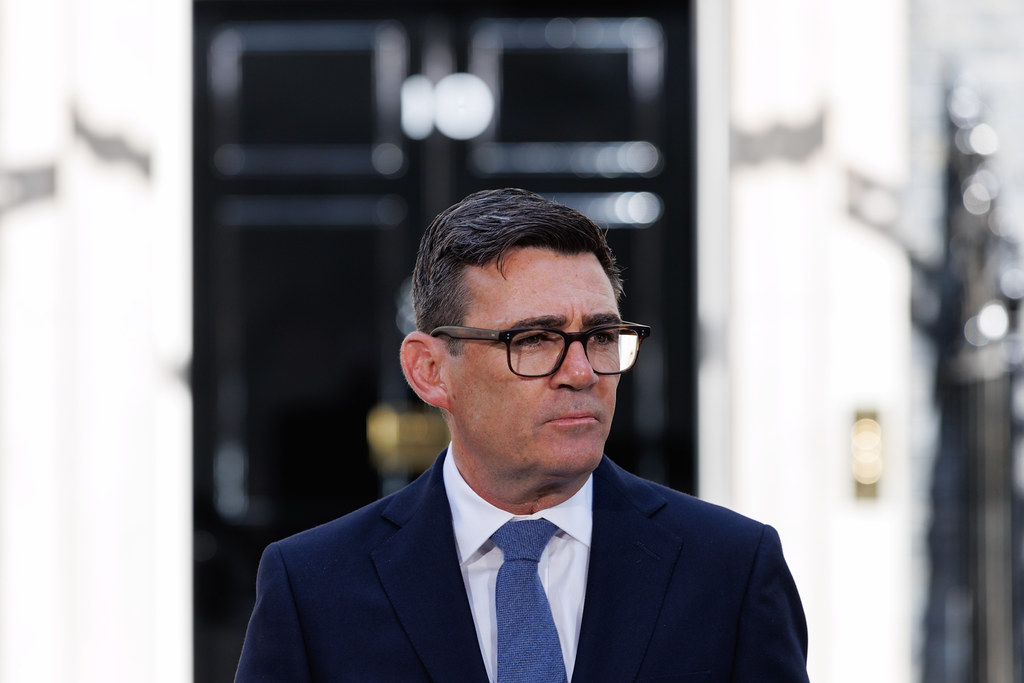
British Prime Minister Andy Burnham confirmed that an emergency meeting of the Cabinet Committee on Antisemitism would be held to ensure the highest level of security for the Jewish community over the High Holy Days.
Burnham and Communities Secretary Angela Rayner had called the meeting, which brought together the country’s top security coordinators ahead of Rosh Hashanah and Yom Kippur, as they met Jewish communal leaders at Downing Street.
Acknowledging “how much the community is struggling”, Burnham told the gathering: “Right now, the levels of anxiety are really quite high and probably never higher in terms of a sense of people’s personal safety.”
The discussions also focused on concerns over anticipated government sanctions relating to trade with Israeli settlements in the West Bank.
In a joint statement issued after the meeting, communal bodies said: “Whilst the participants expressed support for all efforts to promote peace between Israelis and Palestinians, and their opposition to extremism on all sides, they conveyed significant concerns about the unintended consequences of policies the government is considering in relation to settlements.
“They pressed the Prime Minister to avoid steps that may cause harm to the Jewish community, including measures that would place a profound strain on the Jewish people’s deep connection to places of great religious and cultural significance, including the Western Wall, Judaism’s holiest site.
“They cautioned that broad, untargeted measures may also give legitimacy to a wider boycott movement that marginalises and stigmatises British Jews.”
Joined by several Greater Manchester community figures, Burnham emphasised his determination to ensure there were no gaps in security at synagogues and other communal buildings, just one year after the deadly Heaton Park terror attack that left two people dead.
Burnham and Rayner stressed that communal security was being prioritised not only over the forthcoming weeks but “into the future”.
Burnham pledged that protection for the Jewish community was at its highest-ever level, amid a year marked by rampant antisemitism, including recent attacks in Golders Green and Finchley in north London.
Rayner said: “I’ve spoken to officials because I know how significant this area is.
“We’re ensuring that the Cabinet Committee on Antisemitism is meeting so every department is involved, following recommendations and ongoing work within the DfE, so that we leave no gaps and provide coordinated support—not just now, but into the future.
“I want to recognise the fear and concerns that people have and show that we want to work proactively.
“I don’t want our words of support to only come at memorials or after tragedies; I want us to be more proactive, and I know the Prime Minister and other government departments want to listen.”
In their statement, the communal leaders said: “In a constructive and focused discussion, the participants set out the full extent of the concerns of British Jews in the context of record levels of antisemitic incidents. They spoke about measures needed to address the community’s heightened fears heading into the Jewish holiday period, which marks a year since the deadly Heaton Park attack and comes just a few months after violent attacks, including arson and stabbings, in Golders Green.
“Participants stressed the importance of maintaining a clear line against all expressions of antisemitism wherever it arises, including continuing the important work of tackling this hatred within Labour and other political parties.”
The meeting also took place ahead of the anticipated announcement of government sanctions against Israel over West Bank trade.
“They also asked the Prime Minister to carefully consider the potentially perverse consequences of announcing such measures during an already heated Israeli election, and the need for both the UK and Israeli governments to ensure that domestic political considerations do not stand in the way of the positive policy outcomes that the Middle East so desperately needs.”