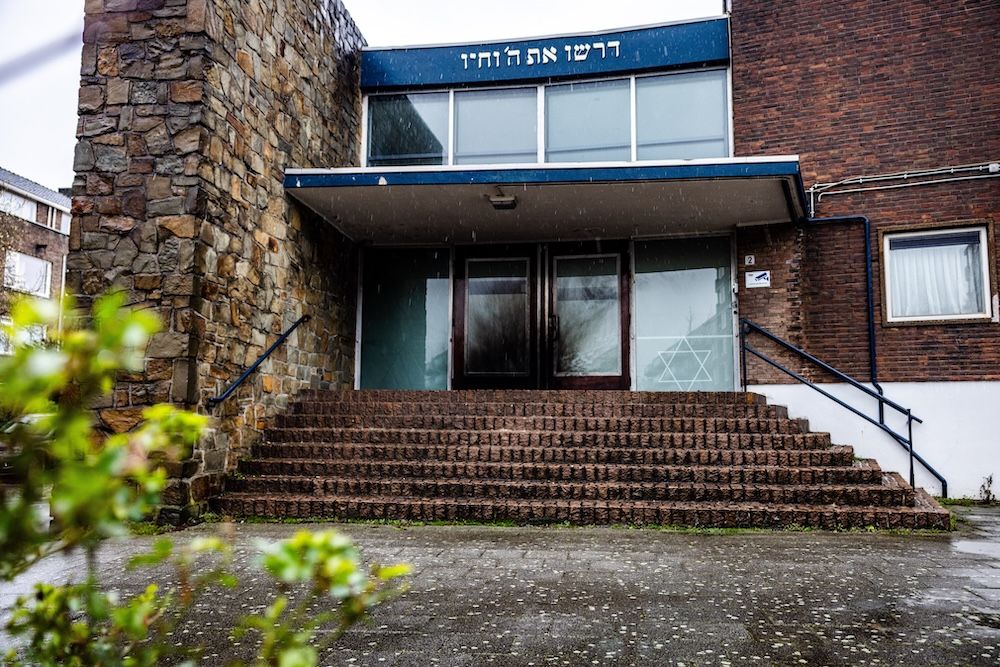
King Willem-Alexander of the Netherlands visited the historic Portuguese-Jewish Snoge in The Hague, marking the 300th anniversary of the synagogue and meeting members of the Dutch Jewish community.
Built in 1726, the Snoge is one of the most significant historic Jewish sites in The Hague. The synagogue was established as a place of prayer and gathering for Portuguese Jews who settled in the city and has remained an important symbol of the centuries-old presence of Jewish life in the Netherlands.
The visit took place at a time when Jewish communities across the Netherlands are confronting growing concerns about the visibility and security of Jewish life. During his conversations with community members, the King heard directly about the experiences of Jews living in the Netherlands today.
Among those sharing their experiences were parents whose children no longer feel comfortable wearing a kippah in public, Jews who conceal their mezuzahs and people who avoid reading Hebrew on public transport. Younger members spoke about increasingly thinking twice before openly identifying themselves as Jewish.
These personal experiences highlighted the gap between the continuing vibrancy of Jewish life in the Netherlands and the challenges some Jews face in expressing their identity openly in public.
King Willem-Alexander also stressed that Dutch Jews cannot be held responsible for events in Israel. He called on the Netherlands’ “silent majority” to stand with the country’s Jewish community.
The conversations gave the historic synagogue a particular contemporary significance. Three hundred years after the Snoge was built as a place where Portuguese Jews could gather and practise their faith, it remains a place where Jewish life is lived, shared and passed from one generation to the next.
The King’s visit also underscored the importance of listening directly to Jewish communities about their experiences. By hearing from parents, younger members and others about the realities of Jewish life today, the visit brought attention to concerns that are often expressed in terms of statistics and security measures but are also experienced through everyday decisions about visibility and identity.
Three centuries after its construction, the Snoge continues to stand as a testament to the longstanding presence of Jews in the Netherlands. The community remains vibrant and resilient, while its members continue to emphasise the importance of being able to live openly and confidently as Jews.
The Dutch Jewish community expressed its appreciation for the King for listening to these experiences and for using his position to draw attention to the challenges facing Jews in the Netherlands.
The anniversary of the Snoge therefore offered both a reflection on Jewish history and a reminder of the importance of ensuring that Jewish life remains visible, confident and safe for generations to come.