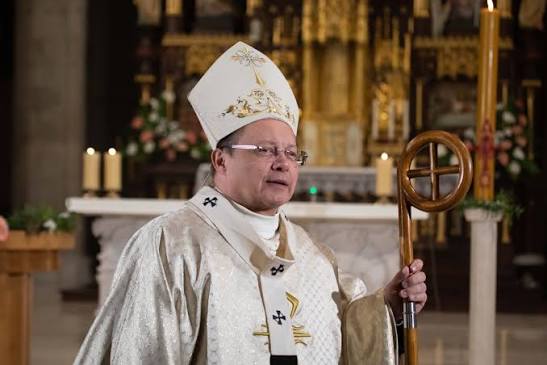
Poland’s Cardinal Grzegorz Ryś has called on the country’s Catholic bishops to undertake “a very serious examination of conscience” following a wave of criticism and hostility directed at a recent pastoral letter condemning antisemitism.
The Archbishop of Łódź, who was the principal promoter of the letter, argued that the controversy revealed a failure to communicate the Church’s teaching on Jewish-Christian relations effectively.
In an interview with the German Catholic journal Herder Korrespondenz, Cardinal Ryś stressed that the pastoral letter introduced “nothing new”. Rather, he explained, it consisted almost entirely of quotations drawn from the current Catechism of the Catholic Church and reflected the principles established by the Second Vatican Council, particularly those concerning the Church’s relationship with the Jewish people.
According to the Cardinal, if these fundamental teachings appear unfamiliar or controversial to some Catholics, it indicates that they have not been adequately transmitted. “If the fundamental truths of the Second Vatican Council seem strange to some people, it means that we have failed to pass them on,” he said, suggesting that the backlash should prompt deep reflection among the Polish episcopate.
Cardinal Ryś reaffirmed that antisemitism is both a sin and a failure of Christian charity. He noted that it does not always manifest itself through explicit hatred, but can also take more subtle forms, including indifference, passivity, lack of concern and insensitivity towards Jewish people. For this reason, he emphasised that genuine dialogue and personal encounter between Christians and Jews remain essential to overcoming prejudice.
The controversy was sparked by a pastoral letter commemorating the fortieth anniversary of the historic visit by Pope John Paul II to the Great Synagogue of Rome in 1986, the first visit by a pope to a synagogue in modern history. Among its statements, the letter reaffirmed the Catholic teaching that “Israel remains the chosen people”, echoing the Church’s post-Vatican II understanding of God’s enduring covenant with the Jewish people.
The pastoral letter nevertheless prompted significant opposition in Poland. According to media reports, some parish priests refused to read it during Mass, while public reactions included hostile and, at times, openly antisemitic criticism.
The Jan Karski Society drew a historical parallel between the current debate and the campaign conducted by Poland’s communist authorities against the landmark 1965 letters of reconciliation exchanged between the Polish and German bishops. Those letters, now widely regarded as a milestone in post-war European reconciliation, also faced fierce opposition when they were first issued.