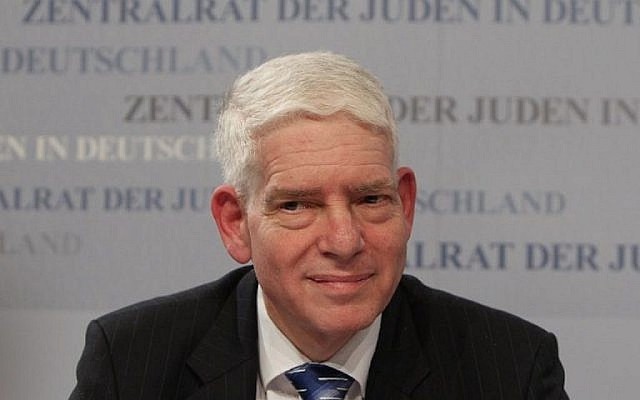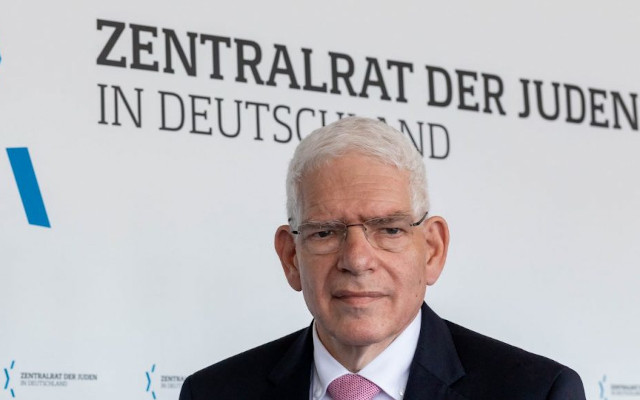
Three years after the 7 October 2023 Hamas massacre, antisemitism has returned in increasingly coded forms, according to Josef Schuster, President of the Central Council of Jews in Germany.
In a guest article published on the third anniversary of the attacks, Schuster argued that antisemitic hatred increasingly presents itself as criticism of Israel or opposition to Zionism, creating challenges that Germany’s existing criminal law is not adequately equipped to address.
Hamas killed more than 1,200 people in Israel on 7 October 2023 and abducted hundreds of hostages to the Gaza Strip. Schuster described the attack as the largest mass murder of Jews since the Holocaust.
He argued that the reaction in Germany demonstrated how quickly antisemitism could resurface. While the massacre was still taking place, people took to the streets to celebrate the killing, torture, sexual violence and abduction of Israeli civilians. According to Schuster, Jewish life in Germany and around the world has remained more visibly threatened since 7 October than at any point since 1945.
Schuster said that antisemitism, which once appeared more openly through swastikas, calls to expel Jews or conspiracy theories, increasingly adopts political language and coded expressions.
He pointed to slogans such as “From the River to the Sea”, “Zionists fight” and “Yalla Yalla Intifada”, arguing that Israel and Zionism can sometimes be used as proxies for Jews and Jewish life.
Schuster maintained that this development has been documented by German security authorities and researchers. Germany’s Federal Office for the Protection of the Constitution has warned that antisemitism increasingly appears in “camouflaged, encrypted and coded” forms.
He also referred to research showing that Holocaust relativisation on TikTok can take the form of numerical codes, wordplay and apparently apolitical online trends.
According to Schuster, legitimate criticism of Israeli government policy can be distinguished from antisemitism. However, he argued that this distinction can also be deliberately exploited to disguise antisemitic hatred.
Schuster argued that Germany’s criminal law must be adapted to address contemporary forms of antisemitism.
The country’s law against incitement to hatred was introduced in 1960 and has been amended several times. Schuster described it as, in many respects, a “criminal law of remembrance”, developed in response to the crimes of National Socialism and intended to prevent their repetition.
He argued, however, that legislation primarily designed to address historical forms of antisemitism can struggle to deal with coded contemporary expressions.
References to “high finance”, “elites”, traditional antisemitic stereotypes or “Zionists”, as well as numerical abbreviations and family names used as codes, can allow antisemitic messages to avoid prosecution even when their intended meaning is understood, he said.
Schuster pointed to cases in which German prosecutors have discontinued proceedings involving such expressions, despite what he described as a clear understanding of their antisemitic character.
Rather than replacing Germany’s existing laws on Holocaust denial and Nazi glorification, Schuster called for them to be supplemented with provisions addressing contemporary antisemitism.
He argued that the law should not require the targeted group to be explicitly named where the direction of an attack would be clear to a reasonable person.
Schuster also called for greater consistency in dealing with antisemitic hatred directed at Jews living in Israel or elsewhere outside Germany. He argued that such hatred should not receive weaker legal treatment than hatred directed at Jews living in Germany, as both ultimately target the same people and can have the same consequences.
For Schuster, the issue is not merely symbolic but a test of whether the German rule of law is capable of recognising new forms of threats to Jewish life.
Three years after 7 October, he concluded, the manifestations of this new antisemitic threat are visible both on German streets and across social media. The law, he argued, must now be capable of recognising them as well.