A new publication by the Federal Association of RIAS has documented a significant increase in antisemitic incidents with an Islamic or Islamist background since 7 October 2023, while finding that such incidents are comparatively rarely reported but disproportionately likely to involve violence.
The report, Antisemitism in Islamic and Islamist Contexts, analyses incident data collected by RIAS reporting centres between 2019 and 2025 and examines how Islamist actors in Germany use antisemitism, particularly Israel-related antisemitism, as part of political mobilisation.
Between 2019 and 2025, RIAS recorded 564 antisemitic incidents with an Islamic or Islamist background. While these represented a small proportion of the more than 30,000 incidents documented by RIAS during the period, 15.1 per cent involved threats, assaults or extreme violence. This was more than twice the proportion recorded across all antisemitic incidents, at 6.1 per cent.
Almost 80 per cent of the 564 incidents were recorded after 7 October 2023, indicating a marked increase following the Hamas terrorist attacks and the subsequent war in Gaza.
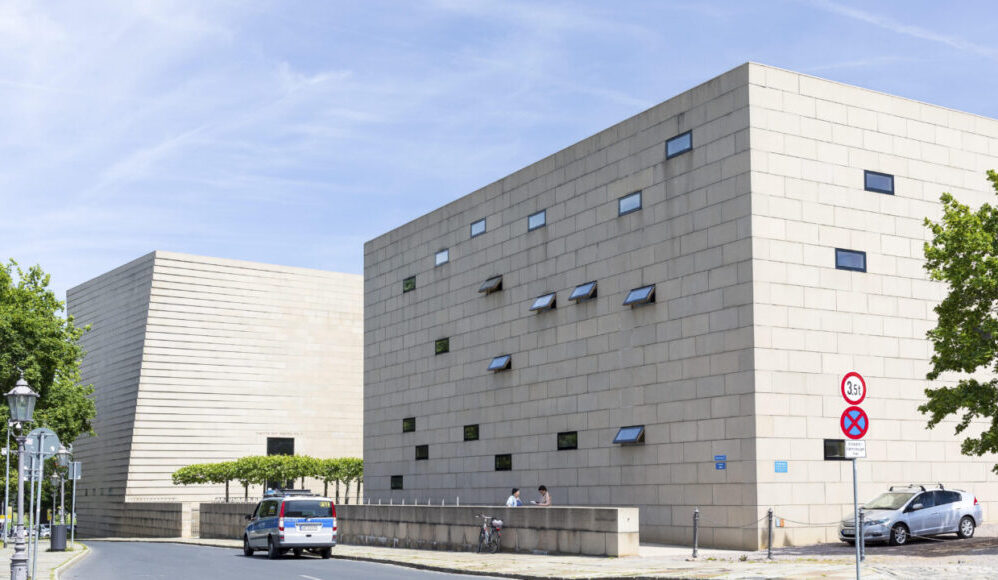
The report highlights several incidents illustrating the potential for violence. These include the 2022 shooting at the Old Synagogue in Essen by members of an Iranian terrorist cell and the antisemitic Islamist knife attack at Berlin’s Memorial to the Murdered Jews of Europe in February 2025, in which a tourist was seriously injured in the neck.
Antisemitism with an Islamic or Islamist background is also reported in everyday settings. In June 2024, two people wearing kippot were subjected to antisemitic abuse in public in Frankfurt am Main. When another person intervened, they were threatened with being killed by Allah.
RIAS also examines how Islamist actors use Israel-related antisemitism as part of political mobilisation. The groups analysed have links to the banned Islamist organisation Hizb ut-Tahrir and have sought to reach audiences beyond established Islamist milieus.
The campaign Nie wieder Staatsräson! (“Never again raison d’état!”) is highlighted as an example. Its petition collected more than 500,000 signatures, while campaigners sought to connect Islamist narratives with wider public debates about Israel. These included describing Israel as a “Zionist colonial project”. According to the report, antisemitism is also a central element of the broader ideological worldview of Islamist groups.
The publication also includes research by PD Dr Sarah Demmrich examining antisemitic attitudes among parts of Germany’s Muslim population. One study found substantially higher levels of antisemitic attitudes among the prospective Islamic religious teachers surveyed than in the general population.
A second study found no significant increase in levels of antisemitic agreement among Muslims following 7 October. However, the research identified a significant increase in the association between antisemitism and radical attitudes, including religious fundamentalism and acceptance of terrorism and violence.
Benjamin Steinitz, Managing Director of the Federal Association of RIAS, said the findings demonstrated the need to address antisemitism as an important component of Islamist mobilisation through both law enforcement and prevention measures. He also stressed that Islamist actors should not be treated as democratic partners of the state or civil society, while arguing that opposition to Islamism should not be left to far-right actors and anti-Muslim agendas.
Demmrich said antisemitism among Muslims was a serious issue beyond Islamist milieus and called for democratic structures and open, non-fundamentalist forms of religious practice in mosque communities to be strengthened, alongside greater trust in public institutions such as the police and judiciary.
The publication also examines the experiences of other minorities affected by Islamist hostility. Kurdish political educator Fatma Keser describes hostility and threats directed against Kurds in Germany and identifies parallels between antisemitic and anti-Kurdish narratives, including rejection of pluralism, collective blame and the legitimisation of violence.
Keser argues that opposition to Islamism should be understood as a shared concern among communities affected by Islamist ideologies, including Êzîdis, Baloch, Kurds, Alevis, Jews, Assyrians and others.