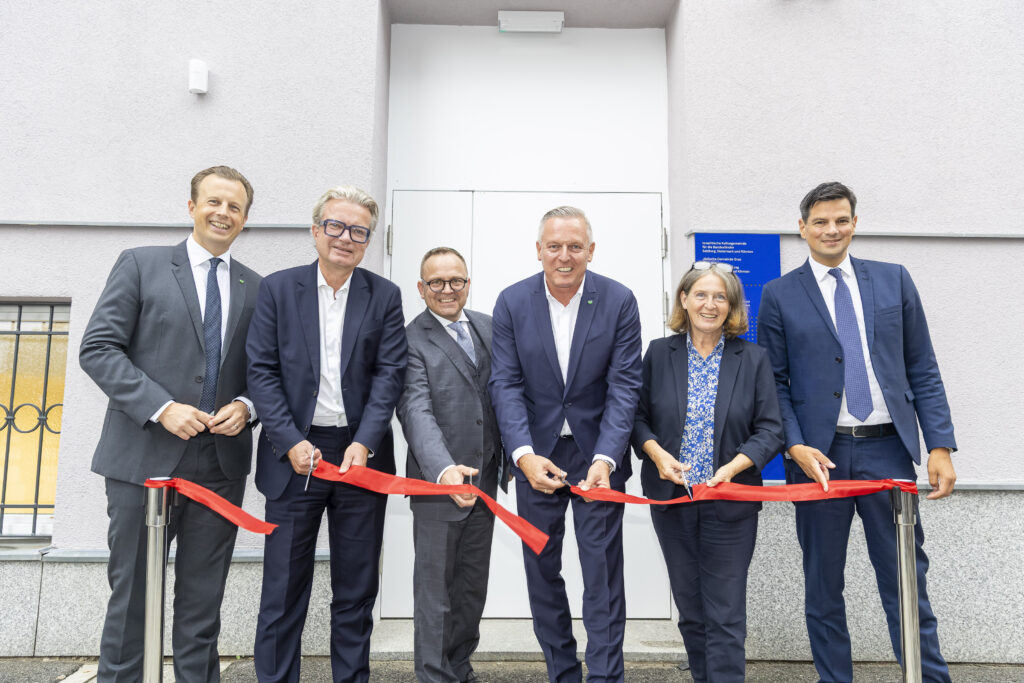
The city of Graz has opened the Milton Weber Jewish Cultural Centre, providing a new permanent space dedicated to Jewish culture, community life, dialogue and social exchange. Located on David Herzog Square, next to the Graz Synagogue, the centre is the first permanent cultural institution established by a Jewish community in Austria.
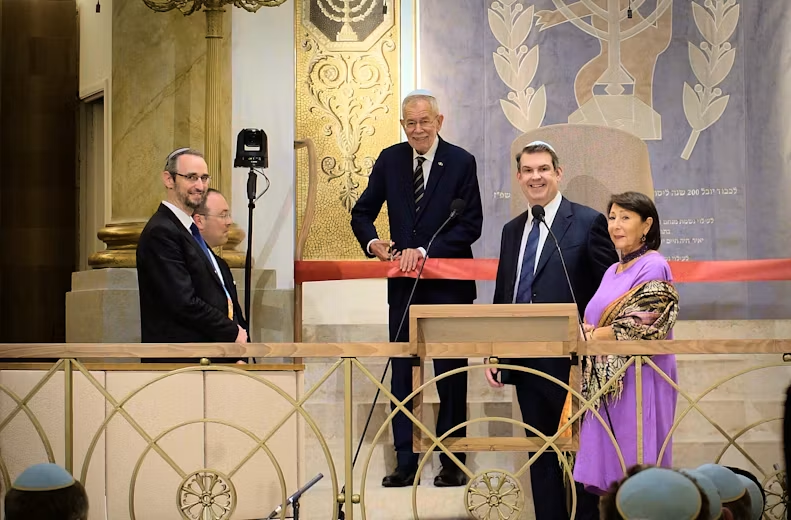
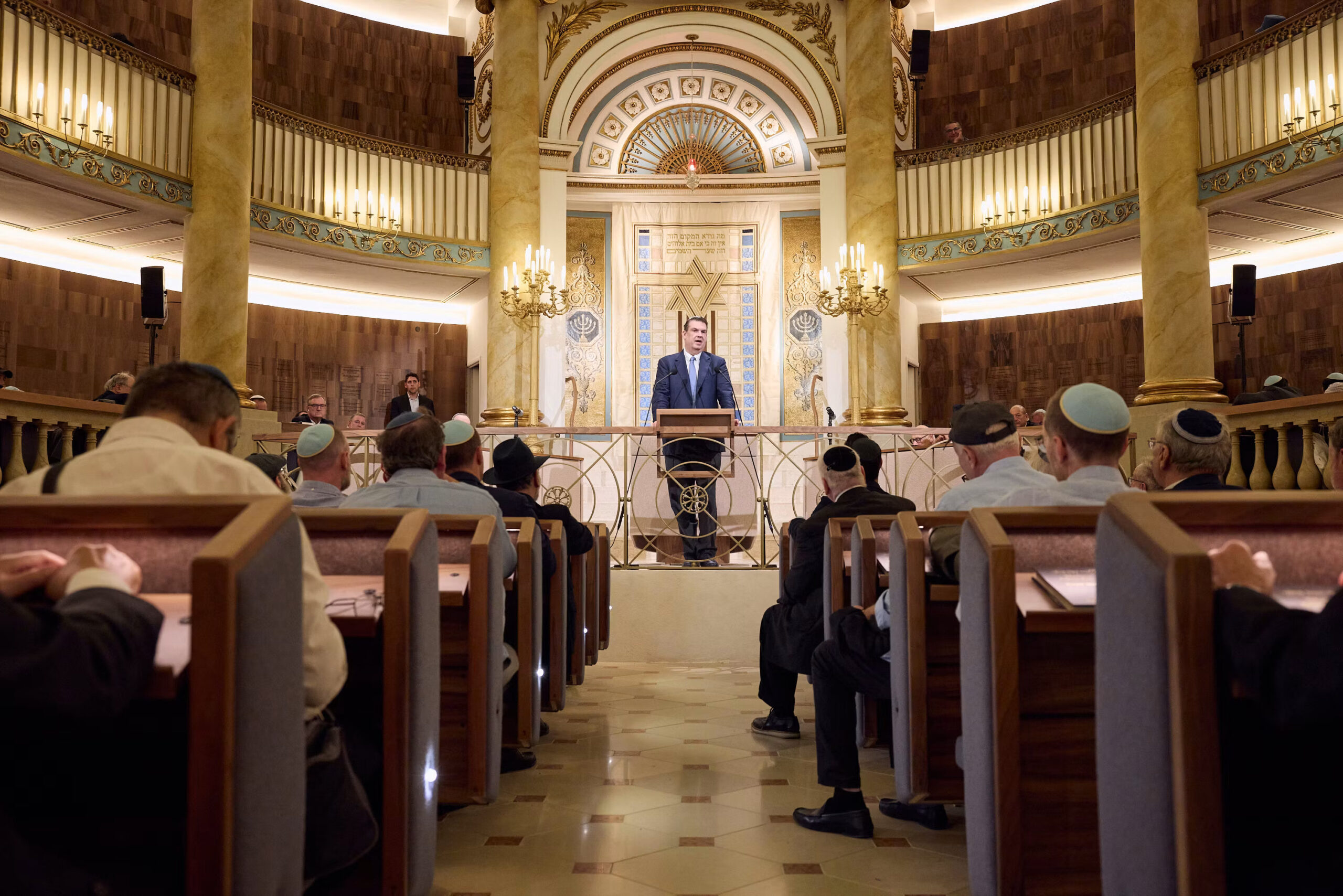
The centre was officially inaugurated at the Graz Synagogue in the presence of numerous guests, including Graz Mayor Elke Kahr and Governor of Styria Mario Kunasek. The opening marks an important milestone for Jewish life in Graz and reflects a commitment to ensuring that Jewish culture remains a visible and integral part of Austria’s public and cultural landscape.
The idea for a permanent Jewish cultural centre in Graz emerged in 2021, following the attacks targeting the Graz Synagogue. Five years later, the initiative has become a reality. The new centre is intended to make Jewish life more visible and accessible while providing a dedicated space for cultural and educational activities, including art, literature, music and history, as well as discussions on contemporary social and political issues.
The centre will also provide opportunities for encounters between the Jewish community and the wider public. Through exhibitions, cultural programmes, lectures and dialogue, it will offer a platform to explore Jewish heritage and contemporary Jewish life while encouraging greater understanding and exchange within the broader community.
Its establishment was made possible through the support of the City of Graz, the State of Styria and the Jewish Cultural Foundation. The investment represents a long-term commitment to preserving and developing Jewish communal and cultural life in the city.
Speaking at the inauguration, Graz Mayor Elke Kahr highlighted the importance of the new centre for the city and its future.
“This place represents values and attitudes that we must preserve. In general, we need to show more integrity and moralise less. Today, there are no easy solutions, but the solutions we find must never come at the expense of others. As the City of Graz, we have kept a promise and, out of conviction and commitment, supported the establishment of this cultural centre. It will be a place that guides us towards the future.”
Styria Governor Mario Kunasek also underlined the wider social significance of the new institution.
“There are days when you have to make a statement. Today is one of those days. Jewish life is present, and lively debates should take place here. This place is of great importance because Jewish life needs a place at the heart of our society.”
Styria’s Regional Minister for Culture, Karlheinz Kornhäusl, described the centre as a place with the potential to enrich the wider community.
“In many ways, this will be an enriching place. Jewish life will become visible here and, as a result, develop naturally. It is a place of encounter that connects people and promotes understanding.”
The centre’s opening programme features two photographic exhibitions by French photographer Ouriel Morgensztern. The exhibitions explore Jewish life in different parts of the world and the social, cultural and religious diversity of Israel, introducing visitors to the breadth and diversity of contemporary Jewish experience.
The new cultural centre is named after Milton Franklin Weber, whose life was closely connected to Graz and to the persecution of Jews under Nazi rule. Two of his daughters, who never had the opportunity to meet their father, attended the inauguration.
Born Alois Weber in Graz on 30 May 1910, Weber was adopted as a child by the Gogg family. He received his musical education at the Graz Conservatory, where he later taught. Before marrying Ilse Pollak, he converted to Judaism.
Following the Nazi seizure of power and the persecution of Jews and those associated with Jewish life, Weber fled to Italy in 1939, where he was interned for a period. In 1941, he escaped to the United States. There, he adopted the name Milton Franklin Weber and continued his career as a musician, conductor and music educator.
Among his achievements, Weber founded the Waukesha Symphony Orchestra and later taught at Roosevelt University in Chicago. He died in the United States in 1968, aged 58.
Today, a Stolperstein on Mandellstrasse in Graz commemorates his life and recalls the fate of Jews and Jewish families whose lives were disrupted or destroyed by Nazi persecution.
Naming the centre after Weber therefore connects its future-oriented cultural mission with the history of Graz’s Jewish community and the consequences of antisemitic persecution. The centre serves not only as a place for contemporary Jewish cultural life, but also as a space in which history can be remembered and discussed.
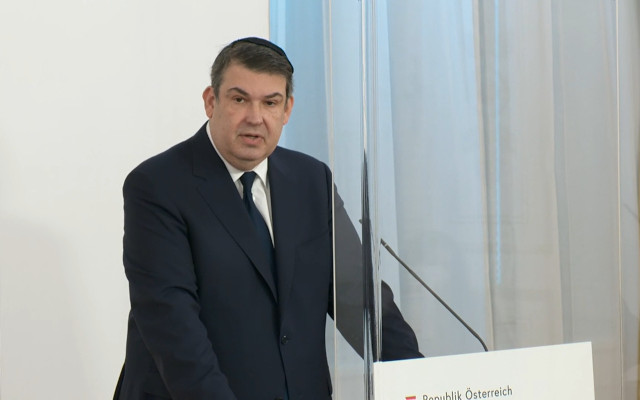
Eli Rosen, President of the Jewish Community of Graz, described the inauguration as the transformation of a long-standing aspiration into a permanent home for Jewish cultural life.
“There are houses that are built because something needs to be built. Today we are inaugurating one of those houses. It is our permanent home, with its own programme and its own voice. An intention has become reality. This house should not be a place of conformity, but a space that opens horizons.”
The opening of the Milton Weber Jewish Cultural Centre comes at a significant time for Jewish communities across Europe. Beyond providing a venue for cultural activities, permanent Jewish institutions can strengthen community resilience, preserve Jewish heritage and ensure that Jewish life remains visible and present in the societies in which it forms an integral part.
For Graz, the new centre represents both a home for the Jewish community and an invitation to the wider public: a place where Jewish history and contemporary life can be encountered, discussed and experienced.